


Magic: Fantasy Roleplay Chat
4.65.55K Reviews
App Specs
- Version
- 2.3.5
- Updated On
- License
- Free
- Downloads
- 1,000,000+
- Developer
- Digital Fun LLC
- Categories
- Entertainment
- Platform
- Android
Screenshots

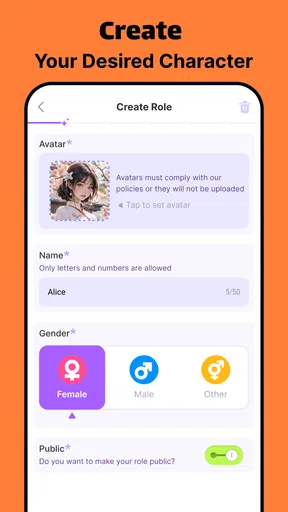
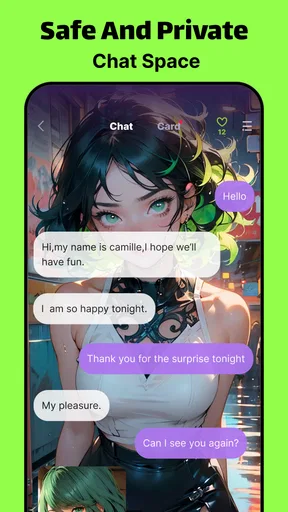

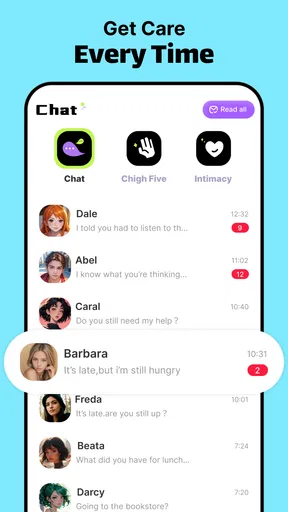
 Analysis by AppCompare
I went into Magic: Fantasy Roleplay Chat expecting a light entertainment app, but its appeal became clearer after I stopped treating it like a normal messaging service. The point is to explore fantasy conversations, try different imaginative situations, and see how naturally I can keep a fictional exchange moving. It is a free app from Digital Fun LLC, available for Android users on version 7.0 or later, and it sits firmly in the mature entertainment space with a 17+ content rating.
My first impression was that the app works best when I bring a little direction of my own. A vague opening can produce a forgettable conversation, while a simple setup with a role, a mood, and a short goal gives the exchange much more shape. That makes this less of a passive entertainment feed and more of a small creative playground. I would recommend it to people who enjoy fantasy roleplay, improvised dialogue, and character-driven scenarios, but I would not suggest it to anyone looking for a conventional game with levels, combat systems, or a clearly defined campaign.
How the everyday roleplay workflow feels
The basic routine is straightforward: open a conversation, establish the kind of fantasy situation I want, and continue by responding to the character or scenario presented. I found that the quality of the session depends heavily on the opening message. “Tell me a fantasy story” leaves too much room for a bland result. A more useful starting point gives the scene a location, identifies my role, and adds one immediate problem to solve.
For example, I might begin as a cautious traveler arriving at a remote village during a storm, with a locked tower visible beyond the fields. That small amount of structure gives the conversation somewhere to go without turning it into a script. I can then decide whether I want investigation, humor, danger, romance, or a quieter character moment. The app is most enjoyable when I treat each reply as a prompt for the next decision rather than waiting for it to do all the creative work.
This also makes it easy to use in short bursts. I can play through a few exchanges while taking a break, pause when I reach a natural turning point, and return later with the central situation still in mind. It does not require the same uninterrupted commitment as a long role-playing game. That is a real strength for anyone who wants fantasy entertainment during a commute, before bed, or between tasks.
At the same time, the format is not ideal for every kind of roleplayer. If I want a carefully balanced adventure with maps, inventory, tactical choices, or a reliable ruleset, a tabletop platform or a traditional role-playing game is a better fit. Here, the pleasure comes from conversation and imagination. The experience can feel flexible and immediate, but that flexibility also means I need to provide direction when I want consistency.
The mature age rating matters when deciding who should use it. This is not something I would hand to a younger child simply because the interface looks approachable. Adults should also remember that fantasy roleplay can move into themes they did not originally intend, so I prefer to establish boundaries early and redirect the conversation when necessary. That habit makes the sessions more comfortable and keeps the tone closer to what I actually wanted.
Worth Reading Before You Choose

EA SPORTS FC Mobile 26 Is a Bigger Football Game, but It Takes Time

Flipboard Shows What News Apps Must Do Beyond the Feed

Switching to Android Auto Means Rethinking Your Driving Routine

Google Calendar Makes a Crowded Week Easier to Manage

Ludo King Makes the Most of the Minutes Between Plans

Baby Panda World Brings Quick Play to Modern Phones, but Its Game Library Feels Busy
What I would set up before a longer session
Before starting a serious scenario, I write down three things in my opening message: who I am, what kind of tone I want, and what should happen next. “I am a disgraced knight, keep the tone tense but not graphic, and begin with a difficult choice at the city gate” is much more useful than a broad request for fantasy content. This is one of the simplest ways to get more reliable results without spending extra money.
I also avoid introducing too many characters at once. A crowded opening can make it harder to remember who knows what, especially when the conversation becomes longer. Beginning with one main character and one clear conflict gives me space to learn the app’s rhythm. Once the exchange feels stable, I can add a companion, rival, mentor, or mysterious stranger.
Another useful habit is to state what I do not want. If I am looking for a serious mystery, I can say that I prefer no slapstick interruptions. If I want a relaxed adventure, I can ask for a lighter atmosphere. These instructions do not guarantee perfect consistency, but they reduce the amount of correction I need later. In my experience, a short boundary at the start works better than repeatedly repairing the tone after every reply.
Settings and choices worth checking early
I would not rush into a long roleplay without looking through the available controls and account choices first. The exact experience can depend on how the app presents its conversations, and it is worth becoming familiar with the basic options before investing time in a detailed scenario. I pay particular attention to anything related to conversation management, content suitability, and purchases.
The app is free to install and use, but it includes optional in-app purchases ranging from $1.99 to $49.99 per item. That is a wide range, so I would approach the purchase area deliberately rather than tapping through it casually. Anyone sharing a device should use the platform’s purchase protections, especially because a free download can still contain paid extras. I see the free entry point as a good reason to test the app first, not as a promise that every possible part of the experience is included at no cost.
I also keep the mature audience setting in mind when choosing scenarios. Even if I begin with a harmless quest, the direction of a fictional conversation can change. I prefer to decide in advance whether I want suspense, romance, comedy, or darker fantasy, then keep my prompts aligned with that choice. This is a practical way to avoid an uneven session where the mood changes simply because the opening was too vague.
Device compatibility is fairly approachable for Android users because the app supports Android 7.0 and later. That does not tell me how every older phone will perform, but it does make the app accessible to people who are not using a recent handset. I would still keep expectations sensible on an aging device, particularly if I am switching between several apps or maintaining a long conversation.
The current version is 2.3.5, which is useful context when comparing impressions from different periods. I would make sure the installed version is current before judging a problem, since app behavior can change through updates. I also prefer to restart a session cleanly when a conversation begins drifting instead of trying to force it back into shape through a dozen corrective messages.
Faster patterns for better conversations
Experienced use is less about writing long prompts and more about repeating a few effective patterns. My favorite is the compact scene card: role, setting, objective, tone, and immediate obstacle. It takes only a few lines, but it gives the conversation a framework. For instance, I can identify myself as a novice mage, place the scene in a flooded archive, ask for a tense but adventurous tone, and add the goal of recovering one specific book before the water rises.
Another efficient pattern is the decision prompt. Instead of asking the app to continue indefinitely, I end my message with a clear action or question. I might inspect the sealed door, question the silent guard, or reveal a secret about my character. This keeps me involved and prevents the exchange from becoming a stream of descriptions that I merely read.
When continuity starts to loosen, I use a short recap rather than rewriting the entire story. I can say who the important characters are, what has already happened, and what unresolved problem matters now. That is faster than complaining that the conversation forgot something, and it gives me a clean point from which to continue. The recap also helps when I return after a break and no longer remember every detail.
I have found that alternating between action and dialogue produces a more satisfying rhythm. If every message is a command, the characters can feel flat. If every message is dialogue, the scene may lose momentum. I might describe opening a hidden compartment, then ask the companion what they recognize inside. That simple alternation creates room for discovery and character reaction without requiring a complicated system.
Short sessions benefit from a clear endpoint. I like ending after a reveal, a decision, or a safe arrival rather than stopping in the middle of confusion. This makes it easier to return later and gives each visit a sense of completion. For a lunch break, I might aim for one encounter. For an evening session, I might build toward a larger choice. The app accommodates both styles because the user controls the pace.
Where the flexibility reaches its limits
The biggest limitation is that conversational freedom is not the same as structured game design. I cannot approach every exchange expecting strict cause and effect, carefully measured difficulty, or permanent consequences. The app’s strength is improvisation, so I need to accept some looseness in exchange for speed and creative range. When I want firm rules, a dedicated role-playing game will usually provide a more dependable experience.
Long conversations can also demand more attention from me. Important details may become harder to track as the story grows, and a character’s personality may need occasional reinforcement. I consider this part of the trade-off rather than an automatic failure. The practical solution is to keep a small personal note with names, goals, secrets, and open questions. That note becomes especially useful for a multi-session mystery or romance plot.
I would also avoid treating the app as a replacement for real social interaction. It can be a fun way to explore fictional dialogue and practice creative writing, but it does not offer the unpredictable understanding of a human roleplay partner. Someone who mainly wants shared storytelling with friends should look toward a multiplayer or tabletop alternative. Someone who wants private, immediate experimentation may find this format more convenient.
There is a similar distinction between this app and ordinary entertainment apps. Streaming services give me polished stories with fixed pacing. Magic: Fantasy Roleplay Chat gives me more influence, but it also asks me to contribute. If I am tired and want to watch something without making decisions, a film or series is easier. If I want to test a character idea, explore an unusual premise, or steer a scene in my own direction, this app is more engaging.
The mature rating is another reason to use judgment when sharing conversations or devices. I would not assume that a fantasy label means every scenario is suitable for every audience. Adults should choose prompts carefully and stop a session when it moves away from their comfort zone. That is particularly important for users who want to involve younger family members in imaginative activities; this is not the app I would choose for that purpose.
Who will get the most from it
I think the strongest audience is made up of adults who already enjoy fantasy fiction and want an interactive way to experiment with scenes. Writers may use it to test dialogue ideas or explore how a character reacts under pressure. It can also suit readers who enjoy imagining alternate paths through a story but do not want to learn a full tabletop rule system.
It is useful for practicing specificity, too. If a scene feels dull, the problem is often visible in the prompt: no objective, no conflict, or no emotional direction. The app gives me quick feedback on whether an idea has enough shape to sustain a conversation. I would not treat that as a formal writing course, but it is a convenient exercise for learning how small details affect an interactive scene.
Casual users can enjoy it without preparing a campaign. A five-minute conversation about a magical market can be enough. The important point is to choose a manageable premise. A small mystery, a negotiation, or a meeting with a suspicious traveler usually gives better short-form entertainment than an attempt to create an entire fantasy kingdom in one message.
On the other hand, I would skip it if I dislike reading and writing back. The app’s entertainment value depends on participation, even when the replies are doing most of the descriptive work. I would also choose another option if I need a dependable content filter for children, a competitive game loop, or a shared campaign with several real people.
My verdict after settling into the habit
Magic: Fantasy Roleplay Chat has earned its place as a flexible fantasy entertainment app rather than a full game. Its free price makes it easy to try, and its audience is substantial, with a 4.6 average from around 39 thousand ratings and more than 1 million installs. Those figures suggest that the concept has found a real audience, but my recommendation is based more on how well the conversational format fits a particular user than on popularity alone.
I like it most when I use a repeatable workflow: define the character, set the tone, give the scene one immediate problem, and end each message with a meaningful action. Checking purchase choices and keeping the mature rating in mind are equally important. The app becomes noticeably more enjoyable when I guide it with intention instead of expecting a complete adventure to appear from a single vague request.
My honest conclusion is simple: try it if you want private, improvisational fantasy conversations and are happy to help shape the story. Give it a pass if you want tactical rules, a fixed narrative, or a child-friendly entertainment app. For the right user, the best feature is the freedom to turn a small prompt into a personal fantasy scene. For me, that makes it worth keeping around for short creative breaks, provided I remember that I am using a conversational playground, not a replacement for a traditional role-playing game.
Pros
- Interactive roleplay chats create a more personal fantasy experience.
- A wide range of characters can inspire different story directions.
- Useful for casual storytelling without complex game mechanics.
- Chat-based format makes sessions easy to start and continue anywhere.
- Creative prompts can help users overcome writer’s block.
Cons
- Story quality may vary depending on the character or scenario selected.
- Some conversations can become repetitive during longer sessions.
- The fantasy setting may not appeal to users seeking realistic roleplay.
- Internet access may be required for uninterrupted chat sessions.
- Privacy terms should be checked before sharing personal information in chats.
FAQs for Magic: Fantasy Roleplay Chat
What is Magic: Fantasy Roleplay Chat?
Magic: Fantasy Roleplay Chat is an interactive role-playing experience centered on fantasy conversations, character-driven storytelling, and magical adventures. Users can chat with fantasy characters, explore different scenarios, and influence how stories develop through their replies. It is designed for people who enjoy imaginative conversations, virtual companions, and choose-your-own-adventure-style role-play rather than traditional action gameplay.
How does the role-playing experience work?
After opening the app, you typically choose or meet a fantasy character and begin a conversation within a themed setting. Your messages help guide the direction of the story, so the experience can feel different depending on your choices and tone. The app is best enjoyed as an open-ended storytelling tool, although the quality and consistency of responses may vary between characters or situations.
Is Magic: Fantasy Roleplay Chat free to download and use?
The application may be available to download without an upfront charge, but some features can depend on the version, platform, or account you use. Apps in this category commonly include optional purchases, subscriptions, advertising, message limits, or premium characters and scenarios. Before downloading or paying, check the current store listing for pricing, trial conditions, renewal details, and what is included in the free experience.
Does the app require an internet connection or an account?
An internet connection may be necessary because role-play conversations and generated responses can rely on online services. Depending on the release, you may also be asked to create an account or sign in to save progress, synchronize conversations, or access premium functions. Users should review the permissions and privacy information before registering, particularly if they plan to share personal details during conversations.
Is Magic: Fantasy Roleplay Chat suitable for children?
Parents should check the official age rating and the app’s current content guidelines before allowing children to use it. Fantasy chat applications can include romance, intense themes, user-generated dialogue, or unexpected responses that are not appropriate for every age group. It is also wise to review privacy settings, supervise younger users, and avoid sharing real-world personal information with virtual characters or connected services.


